Loading...

Description

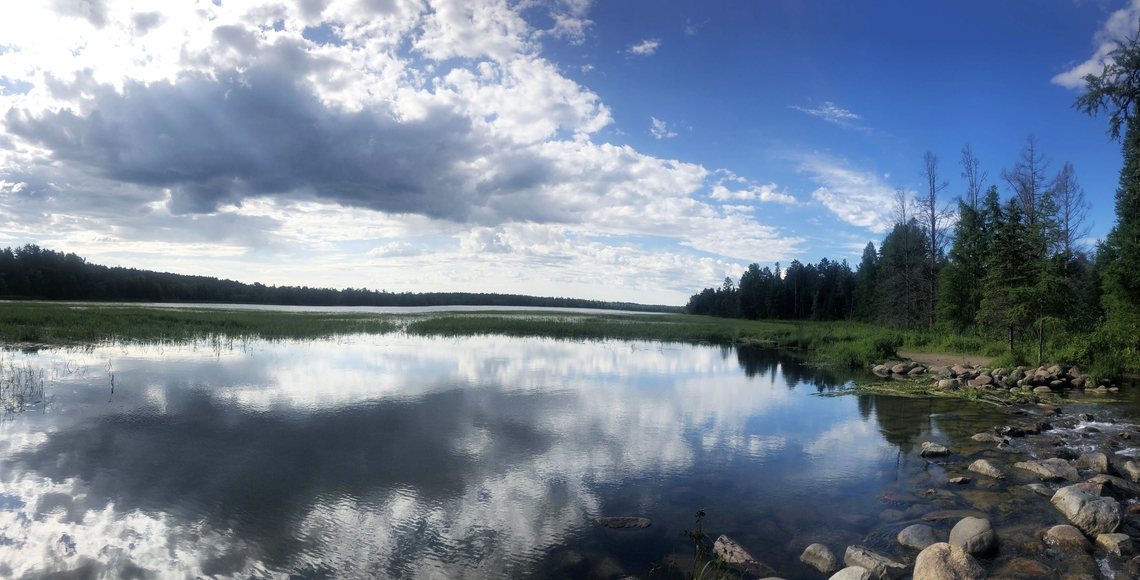
Itasca Headwaters

Explore the intersection of science, nature, and hands-on practice through our series of immersive courses at Itasca Biological Station and Laboratories. The Science of Craft program offers courses that blend field-based science with reflective and skill-based practices. . 

Important details for registration:

  • Each participant must register individually for their course(s). 
  • Participants must be 18 or older. 
  • All participants will stay on site for the duration of the course and share cabin accommodations with modern facilities at the historic Itasca Field Station. 
  • Daily meals will be provided by the Itasca Station Dining Hall. 
  • Participants will be asked about their housing and roommate preference, dietary requirements, and relevant health concerns during enrollment.
  • The Drawn and Write sections run sequentially with a weekend between.  If you are registered for both courses, you can pay an additional fee to stay at Itasca for the weekend between courses.

Please contact IBSL@umn.edu with any questions about the courses being offered.

2026 Courses

  • IBSL X100 - Fish26 - The Science of Fly Fishing (June 10-14)

  • IBSL X100 - Drawn26 - Drawn to Nature: Observing and Documenting Itasca State Park (July 27-31)

  • IBSL X100 - Write26 - Writing the Wild: A Northwoods-inspired Poetry and Prose Course (Aug 3-7)

Dual Enrollment Information

Participants enrolling in both Drawn to Nature and Writing the Wild may remain at the station continuously over the weekend between the two courses. During this two-day break, they are free to explore Itasca State Park and the surrounding area. To cover the cost of lodging and dining for this additional time, dual-enrolled participants will pay an extra fee.

Dual-enrolled participants must select the corresponding “Itasca weekend”  fee when registering for Writing the Wild and must also register separately for Drawn to Nature.


Loading...

Enroll Now - Select a section to enroll in

Section Title
Writing the Wild: A Northwoods-inspired Poetry and Prose Course
Section Schedule
Date and Time TBA
Location
  • Off-Campus
Delivery Options
Short Course  

Section Details

Immerse yourself in nature and reflect on how it has intersected with your life and shaped your perspective. Then, translate those insights into new poems or a nonfiction essay, using information about the creatures around you to inform your work. Experiential learning and activities designed to draw out insights will help you on your creative journey. This unique course will provide you with room to create and inspiration to keep you motivated long after this foray to the Northwoods.

Important Notes:

  • Participants must be comfortable walking on uneven surfaces and trails and must be able to walk at least 0.5 mile without needing to sit and rest.
  • Station dining, housing and classroom buildings are spread across our 10 acre campus in Itasca State Park (see station map).  Participants should be prepared for substantial daily walking. Parking is limited to designated areas; therefore, all travel between cabins, classrooms, and the dining hall is done on foot. This routine movement typically adds up to nearly a mile of walking per day, in addition to any walking required for course activities. 

Instructors

Guest Scientist

See Writing in the Wild course website for more information.

Dual Enrollment Information

Participants enrolling in both Drawn to Nature and Writing the Wild may remain at the station continuously over the weekend between the two courses. During this two-day break, they are free to explore Itasca State Park and the surrounding area. To cover the cost of lodging and dining for this additional time, dual-enrolled participants staying over the weekend will need to choose the Itasca weekend fee when registering for Writing the Wild.


Section Title
Drawn to Nature: Observing and Documenting Itasca State Park
Section Schedule
Date and Time TBA
Location
  • Off-Campus
Delivery Options
Short Course  

Section Details

Throughout history, explorers recorded their natural history observations and travel adventures in notebooks. This tradition continues in the present day practice of nature journaling. Hone your own powers of observation in this course as you explore natural spaces. Learn the basics of nature journaling, then head out to the field to capture what you see and experience on the page. No art background or expensive supplies needed — only a desire to explore the intersection of imagination and observation.

Important Notes:

  • Participants must be comfortable walking on uneven surfaces and trails and must be able to walk at least 0.5 mile without needing to sit and rest.

  • Station dining, housing and classroom buildings are spread across our 10 acre campus in Itasca State Park (see station map).  Participants should be prepared for substantial daily walking. Parking is limited to designated areas; therefore, all travel between cabins, classrooms, and the dining hall is done on foot. This routine movement typically adds up to nearly a mile of walking per day, in addition to any walking required for course activities. 

Instructor

Guest Naturalists

See Drawn to Nature course website for more information and schedule.

Dual Enrollment Information

Participants enrolling in both Drawn to Nature and Writing the Wild may remain at the station continuously over the weekend between the two courses. During this two-day break, they are free to explore Itasca State Park and the surrounding area. To cover the cost of lodging and dining for this additional time, dual-enrolled participants will pay extra fees when registering for Writing the Wild.

Dual-enrolled participants must select the corresponding “Itasca weekend”  fee when registering for Writing the Wild and must also register separately for Drawn to Nature.

Section Title
The Science of Fly Fishing
Section Schedule
Date and Time TBA
Location
  • Off-Campus
Delivery Options
Short Course  

Section Details

Blending scientific principles with practical techniques, this course will deepen your understanding of the science behind each cast. Students will explore the interconnected world of fish behavior, aquatic food webs and ecosystems, and the physics of fly fishing. You will leave with enhanced technical skills, a broader understanding of freshwater ecosystems, and a deeper connection to the underwater world of the fish that you catch. All registered students will receive a copy of Fly Fishing Minnesota as part of the course.

Important Notes: 

  • To comfortably engage in this course, participants must be comfortable putting on and walking in waders, climbing up stream banks, and walking for a distance of at least 0.5 miles without needing to sit and rest.
  • Optional field trips require the ability to enter/exit a canoe from shore, to sit in a canoe for an extended period, and to paddle a canoe.
  • Please be aware that during extended field trips, bathroom facilities will not be easily accessible. Participants should be prepared to use natural surroundings. We will ensure appropriate guidance on how to do this discreetly and respectfully for everyone involved. Restroom breaks will be scheduled during transit to/from field sites.
  • Station dining, housing and classroom buildings are spread across our 10 acre campus in Itasca State Park (see station map).  Participants should be prepared for substantial daily walking. Parking is limited to designated areas; therefore, all travel between cabins, classrooms, and the dining hall is done on foot. This routine movement typically adds up to nearly a mile of walking per day, in addition to any walking required for course activities. 

Instructor

  • Carl Haensel is a fly fishing guide, biologist, conservationist, photographer, educator and author. He teaches post-secondary courses on ecology, biology and geology for teachers and educators and is passionate about outdoor education. Carl is the author of two books about fishing in Minnesota: Fly Fishing Minnesota and Minnesota Fly Fishing Maps. 
  • Jade Thomason has a degree in conservation biology and is an editor, artist and writer. Her background is in forest ecology and entomology, and she has been a long-time collaborator with Minnesota Trout Unlimited. 

See the Science of Fly Fishing course website for more information and schedule.

Required fields are indicated by .